cLICK HERE TO Check out Our YOutube Channel

Can You Find CAT and DOG Hidden in This Letter Grid
Put your focus to the test! Can you spot the words CAT and DOG hidden inside this tricky visual letter grid? Click here to search the puzzle and reveal the answer!
PUZZLES & ILLUSION
DAILY PUZZLE HUBZ
6/5/20264 min read
Can You Find CAT and DOG Hidden in This Letter Grid
There are two animals hiding in a wall of letters — and your brain is about to make finding them much harder than it should be.
You've done word searches before. You probably think you're decent at them. But this isn't a neatly organized grid with helpful categories and dotted lines. This is a jumbled letter matrix, deliberately designed to make your eyes slide past the very thing they're looking for. CAT and DOG are both in there. Right now, hiding in plain sight.
The people who find both words fast tend to have one thing in common — they don't scan the way most people do. They use a method. The people who spend three minutes staring and finding nothing? They're scanning randomly, hoping the words will just pop out. Spoiler: they won't pop out. You have to go get them.
Here's exactly how to play — and then the grid is waiting for you.
The Rules — How to Play
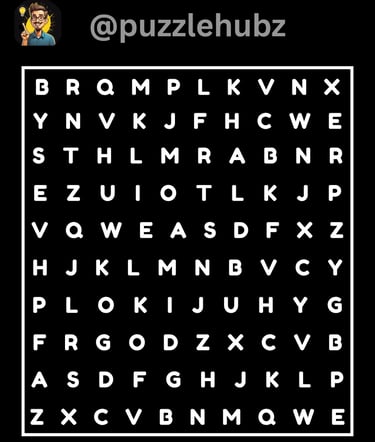
Two hidden words. One letter grid. Your job is to find CAT and DOG somewhere inside it.
The words can run in any direction — horizontal, vertical, diagonal, and possibly backwards. Don't assume they're written left-to-right. That assumption alone eliminates half the possible hiding spots and is exactly how this puzzle beats most players.
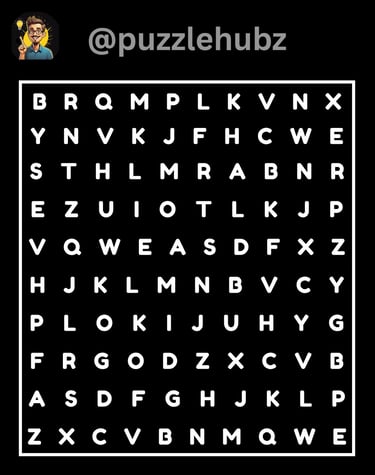
You've got two modes here. Mode 1: study the question image and try to find both words before scrolling. Mode 2: print or copy the grid and physically circle the letters as you go. Either works. What doesn't work is scanning aimlessly and hoping for the best.
Set a timer for 60 seconds. If you haven't found both words by then, you're in the majority — and the answer reveal image is waiting below to show you exactly where they were hiding and why you missed them.
One rule: no jumping straight to the answer. Seriously. Give the grid a genuine shot first.
Puzzle
The Grid
The animals are in here. CAT and DOG — both of them. Start scanning now.
Found them both? Lock in your answers before scrolling.
The Answer Reveal
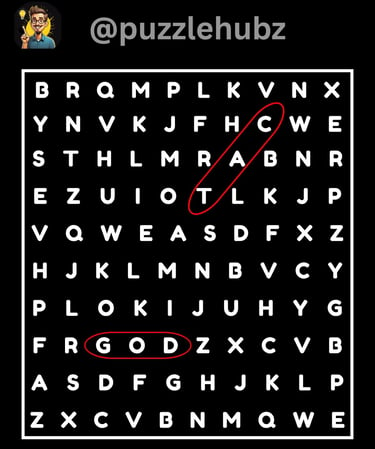
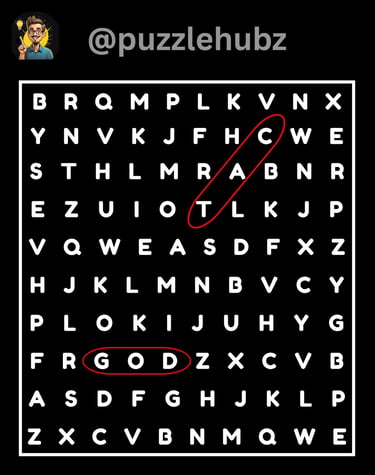
Time's up. Here's where they were hiding.
ANSWER:
The answer image should highlight the exact path of letters spelling CAT and the exact path spelling DOG within the grid, with each word circled or color-coded for clarity. Add a brief note here describing which row, column, or diagonal each word runs through, and whether it reads forwards or backwards, so readers who are still confused after seeing the image can confirm the solution in plain text.
The Science Behind It
You might be wondering why a puzzle this simple — find three-letter words in a grid — can genuinely stump adults for minutes at a time. The answer is less about intelligence and more about how your visual system was never actually built for this task.
Here's what's happening: when you scan a word search grid, your brain isn't reading letters the way it reads normal text. In regular reading, your eyes move in trained, rhythmic jumps called saccades — left to right, line by line, with decades of practice behind them. A jumbled letter matrix breaks that rhythm entirely. Your visual system doesn't have a practiced route to follow, so it falls back on something much more chaotic: random scanning. And random scanning misses things constantly.
This is where selective attention becomes the real story. Selective attention is your brain's ability to focus on specific information while filtering out everything else. In theory, it should help you zero in on C-A-T and D-O-G. In practice, it backfires — because selective attention works best when you know where to look, not just what to look for. Scanning a grid for a word that could appear in any direction, at any angle, overloads the system. Your attention drifts. You re-scan rows you've already checked. You miss what's right in front of you.
Inattentional blindness makes this worse. This is the well-documented phenomenon where your brain genuinely fails to register things that are fully visible — not because your eyes didn't land on them, but because your attention wasn't primed to catch them. If you've ever finished a full scan of the grid and then spotted a word you definitely looked at, that's inattentional blindness at work. Your eyes passed over the letters. Your brain didn't process them as a word.
The reason three-letter words are especially sneaky is pre-attentive processing — the brain's ability to detect features automatically before conscious thought kicks in. Longer words are easier to find in word searches because they create more distinctive visual signatures. A seven-letter word has a longer "shape." CAT and DOG are so short they barely register as patterns, so they hide inside the visual noise of the surrounding letters.
That's why the best strategy isn't to look for the words — it's to look for the first letter of each word and then check its neighbors. Give your brain an anchor, and it finds the rest.
Ready for Another One?
You just got outfoxed by a three-letter word — and now you know the exact reason your brain let it happen. Puzzles like this are a surprisingly sharp workout for the visual system, and the next one in the series hides more animals in a bigger, sneakier grid. Come back and see if you've levelled up.
Help
Questions? Reach out anytime, we’re here.
join us for daily fun booster
© 2024. Daily Puzzle Hubz.